Sanford International Airport FAA Control Tower

Client: Orlando Sanford International Airport

The FAA air traffic control tower at Orlando Sanford International Airport presented a waterproofing challenge that required both careful planning and highly technical execution. Lamphier & Company was brought in to address failing coatings and deteriorating control joints on the tower cab, working within the tight operational constraints of an active FAA facility. The result was a fully restored building envelope, backed by ASTM field-tested sealants and manufacturer warranties.

Step 1: Problem Identification

The tower cab had accumulated layers of previously applied coatings that had begun to fail. Rather than applying new material over a compromised surface, the right move was to assess exactly what was underneath and determine the full scope of what needed to be addressed.

Our team identified two primary issues: coating failure on the cab exterior and deteriorated vertical control joints that were no longer performing their intended function. Left unaddressed, failed control joints allow moisture to work its way into the structure, which is particularly serious on a facility like this where long-term structural integrity is non-negotiable.

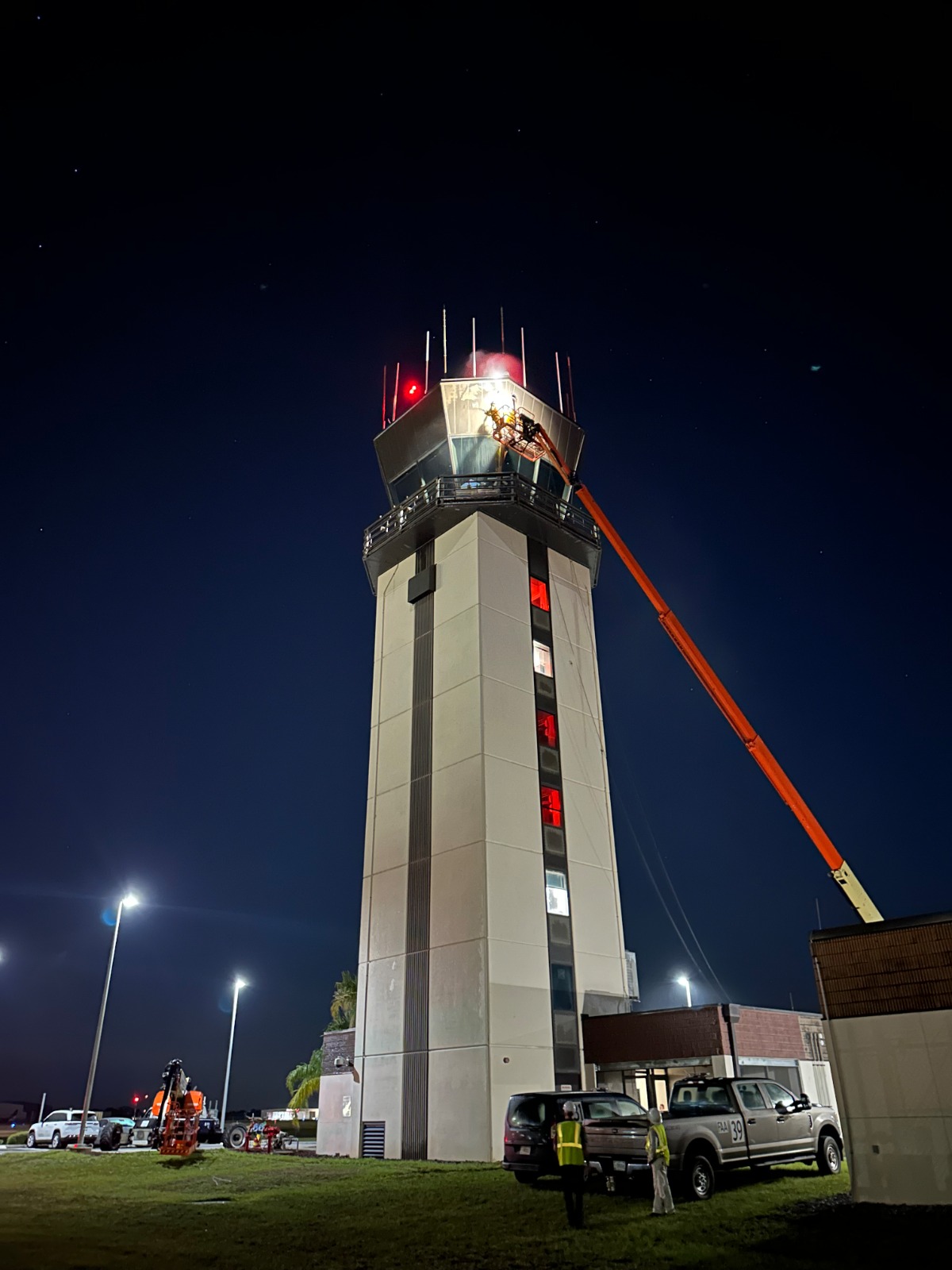
FAA control tower cab exterior

Step 2: Consultation

Before any work began, our team evaluated the tower’s surface conditions and joint configurations to develop an appropriate scope. The cab’s height and the operational nature of the airport required that surface preparation be scheduled during nighttime hours to minimize disruption to active flight operations. This is the kind of site-specific planning our ProGuard Process is built around: understanding not just what a building needs, but the constraints that determine how the work gets done.

For the vertical control joints, we specified urethane sealants and coordinated with the manufacturer prior to application to confirm the product selection was appropriate for the conditions.

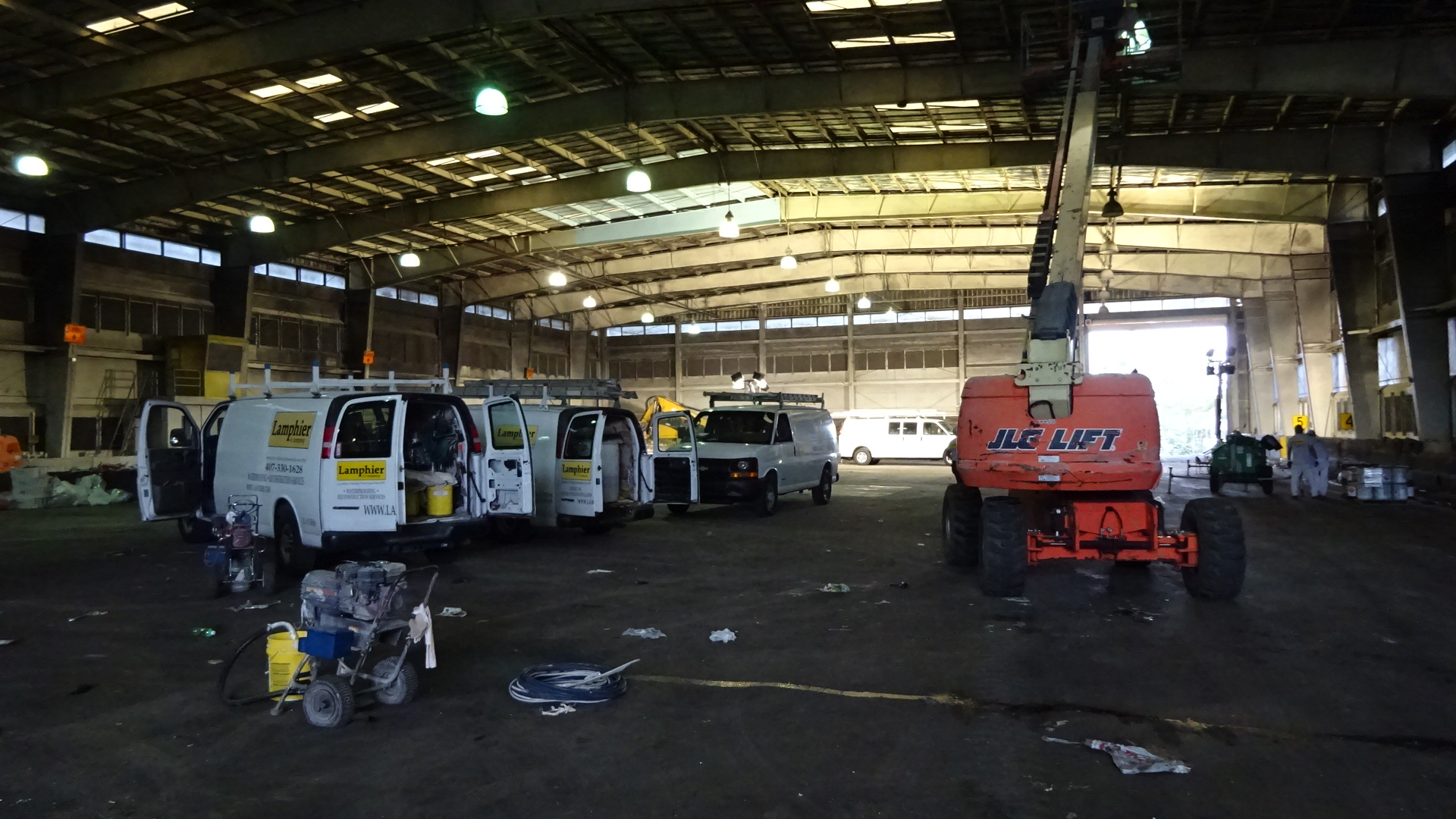
Lamphier & Company crew assessing FAA control tower for waterproofing and sealant work

Step 3: Tailored Solution

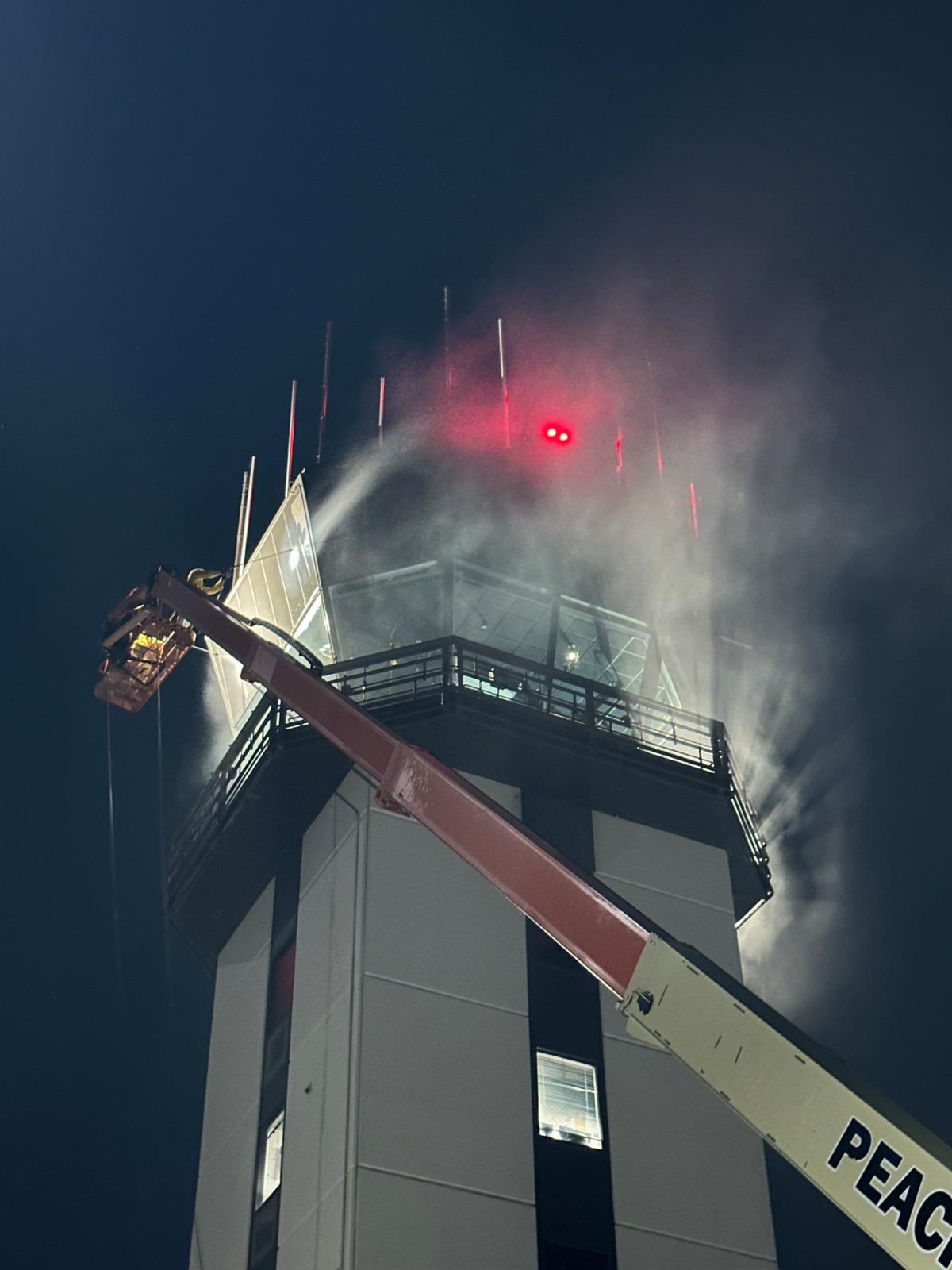
Surface preparation was carried out at night using rotoblasting tips – a mechanical abrasion method that strips failed coatings from the substrate without damaging the underlying surface. The nighttime scheduling kept the project aligned with the airport’s operational requirements throughout.

Once the surface was properly prepared, our crew removed the deteriorated vertical control joints and replaced them with urethane sealants. The sealants were reviewed by the manufacturer, subjected to ASTM field testing, and passed. That verification process is important: it means the sealant performance wasn’t just assumed based on product specs, it was confirmed under actual field conditions.

Our waterproofing and sealants work on a project like this is never just about the application itself. It’s about the full system performing as it should, with documentation to back it up.

Lamphier & Company crew pressure washing FAA control tower cab at night using rotoblasting tips
Lamphier & Company crew assessing FAA control tower for waterproofing and sealant work

Outcomes

The completed project delivered a fully restored building envelope on one of Sanford’s most recognizable structures. The failed coatings are gone, the vertical control joints are replaced with properly tested and warranted urethane sealants, and the tower cab is now protected against moisture intrusion.

Projects like this one reflect the kind of waterproofing work in Sanford that our team is built for: technically demanding, logistically complex, and requiring the kind of experience that comes from over 50 years in the field.

FAA control tower cab exterior