Our articles are crafted by industry experts to provide valuable knowledge, practical tips, and inspiring stories that highlight the impact of our work. Explore our latest articles and stay informed and up-to-date.
How to Perform a Moisture Test on a Commercial Wall Before You Paint or Seal
A wall can look bone dry and still be holding enough water to push a brand new coating off the surface within a year. That is why moisture testing is a standard step before painting or sealing concrete, CMU block, tilt-up panels, or stucco on a commercial building. Quick answer: To moisture test a commercial …
Silicone vs Urethane vs Polyurethane Sealants: When to Use Each on a Commercial Building
Pick the wrong sealant for a joint and it can fail years early, even if the install was perfect. The good news: the choice is simpler than the product aisle makes it look. Short answer: Urethane and polyurethane sealants are the same chemistry, so the real decision is between two families. Use silicone on glass, …
How to Prepare a Metal Roof for Coating (and Why Skipping Rust Treatment Ruins It)
A roof coating is only as good as the metal under it. You can buy the best silicone or acrylic system on the market and still watch it blister and peel within a few seasons if the prep was rushed. And on metal roofs, the step that gets rushed most often is rust treatment. Short …
A commercial roof is one of the biggest line items a facility manager ever has to plan for, so it makes sense to ask what a coating actually buys you before you spend the money. The honest answer has a range, and a few conditions attached. Quick answer: A properly applied commercial roof coating can add roughly 10 to 20 years of service life to an existing roof. The exact number depends on three things: the condition of the roof before you coat it, the type of coating, and how thick it goes on. Coatings preserve roofs that are still…
Repainting a building that is full of people is a scheduling problem before it is a paint problem. The coating goes on the wall in a few hours. Working around tenants, employees, patients, or students without derailing their day is the part that takes real planning. Do it well and most people barely notice the crew was there. Do it badly and you spend the next month fielding complaints about fumes, blocked hallways, and noise during a meeting. The good news: a commercial repaint in an occupied building is very manageable when the work is sequenced, staged, and communicated properly.…
wall panels, wrap around window and curtain wall perimeters, and ride along expansion joints. Their job is simple: keep water, air, and pests out of the building envelope while letting the structure move. In Florida, they wear out faster than most owners expect. Most commercial joint sealants in Florida need replacing every 7 to 15 years. Silicone sealants often reach the 15 to 20 year mark. Polyurethane (urethane) sealants usually last 5 to 10 years, and even less on walls that bake in direct sun. The state's UV, heat, and humidity tend to push failures toward the shorter end of…
Waterproofing coatings in Florida rarely fail because the product was bad. They fail because of what happened (or didn't happen) before the first coat went down. Trapped moisture, a dirty surface, and Florida's brutal mix of heat, humidity, and UV do the rest. Short answer: Most coating failures trace back to prep, not product. If the surface holds moisture, chalk, or unrepaired cracks when you coat over it, the coating peels, blisters, or bubbles no matter how premium it is. Fix the substrate first and the coating lasts for years. Key takeaways Poor surface prep causes the majority of premature…
Fresh paint should hold up for years, not months. So when a commercial coating starts peeling, blistering, or flaking inside the first year, something went wrong long before the flakes showed up. The upside is that peeling almost always has a traceable cause, and that cause usually tells you who's on the hook to fix it. Short Answer Commercial paint peels within a year mainly because the surface wasn't cleaned, dried, or primed correctly before painting. Poor surface preparation, trapped moisture, and incompatible coatings are the three usual suspects. In most cases the applying contractor carries responsibility, since prep and…
Florida punishes flat commercial roofs in ways most building owners never see coming. Relentless UV, summer downpours, standing water that lingers for days, and the occasional hurricane all chip away at the surface above your heads. The roof coating you pick has to survive all of that. So which one wins here: silicone, acrylic, or urethane? Short Answer For most Central Florida commercial roofs, silicone roof coating is the safest pick because it shrugs off ponding water and holds up under brutal sun better than the alternatives. Acrylic is the budget-friendly choice when your roof drains well and stays dry.…
Water dripping into the parking level below a courtyard, or a brown stain spreading across a unit ceiling under a balcony, almost always points to the same thing: the deck's waterproofing has failed, not the deck itself. That distinction matters, because one is a repair and the other is a demolition project. Short answer: Most plaza deck and balcony leaks come from a worn or cracked waterproofing layer, failed joint sealant, or bad drainage, not from the structural slab. If the concrete underneath is still sound, you can usually stop the leak with a liquid-applied traffic coating, joint and crack…
Short answer: For most schools and hospitals, a third-party emission certification like GREENGUARD Gold matters more than whether the can says "low-VOC" or "zero-VOC." The label only tells you what is in the bucket. The certification tells you what ends up in the air kids and patients breathe. And once you tint a so-called zero-VOC paint, it often stops being zero anyway. Key Takeaways Low-VOC usually means under 50 grams per liter (g/L). Zero-VOC usually means under 5 g/L, measured before any color is added. Adding colorant, especially deep or dark colors, can push a "zero-VOC" paint right back up…
Most coating failures on repaints aren't really paint problems. They're compatibility problems. The new coat looked fine going on, maybe even great for a few months. Then it started lifting at the edges. Or bubbling in the sun. Or peeling in sheets after the first good rainstorm. That's not bad paint. That's the new system fighting the old one, and the old one usually wins. Key Takeaways Painting over an existing coating without compatibility testing is the single most common cause of early repaint failure on commercial buildings. Incompatibility shows up as peeling, blistering, alligatoring, solvent lifting, or intercoat delamination,…
Interior and exterior commercial paints are formulated for completely different environments. Interior paint lacks the UV blockers, flexible resins, and mildewcides that exterior coatings rely on, so it chalks, cracks, and peels within months when exposed outdoors. Exterior paint, on the flip side, often contains biocides and VOCs that aren't safe or comfortable for enclosed indoor spaces. Use the wrong one, and the coating fails early no matter how expensive the product was. Key Takeaways Interior paint fails outdoors because it has no UV protection and uses rigid resins that crack when surfaces expand in the Florida heat. Exterior paint…
Painting your commercial building seems straightforward enough. You get some quotes, pick someone, and a few weeks later you have fresh walls. But somewhere between the bid and the final walk-through, things can go sideways in ways that hit your budget hard. Key Takeaways The most expensive commercial painting mistakes aren't always obvious. Poor surface preparation, choosing contractors based solely on price, ignoring moisture problems, and skipping proper planning can double or triple your actual costs when you factor in premature failure and redo work. Most commercial buildings need exterior repainting every 3 to 5 years and interior touch-ups every…
Quick Answer: Most commercial buildings need repainting every 3 to 7 years, though this varies significantly based on your building materials, location, and climate conditions. In Florida's humid climate, expect to repaint more frequently than the national average, typically every 3 to 5 years for most surfaces. Key Takeaways Exteriors: 5-10 years for most materials, but Florida buildings often need attention every 3-7 years Interiors: High-traffic areas every 2-3 years; standard offices every 3-5 years Wood surfaces: Every 3-7 years (more frequent in humid climates) Stucco: Every 5-10 years nationally, but 5-7 years in Florida Metal/aluminum: Every 5-8 years Brick:…
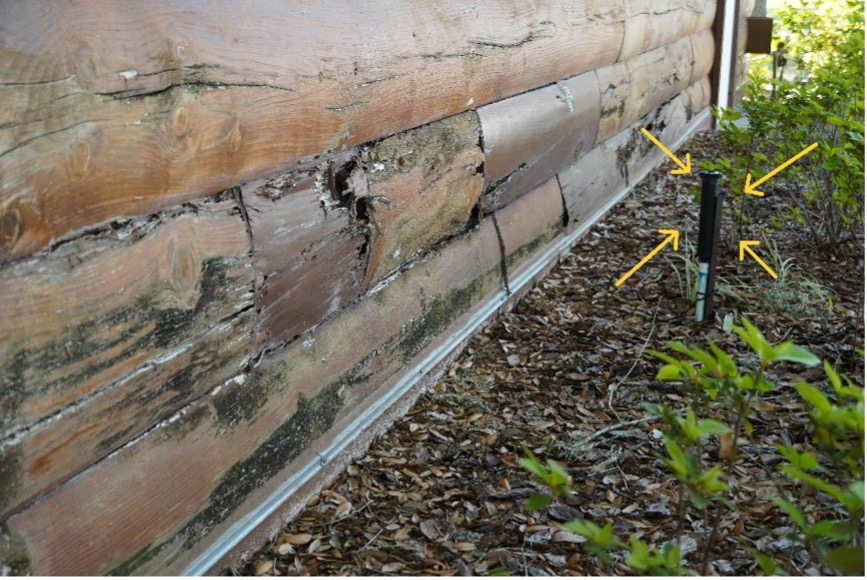
Irrigation systems are crucial for properly maintaining the landscaping around buildings, but when these are improperly managed, they can cause numerous problems and significant damage to the buildings enclosure. Improper irrigation systems that soak the enclosures exterior walls and foundation can become a costly issue to repair. After 38 years of inspecting the condition of thousands of commercial and government buildings, I can confidently tell you that most irrigation systems are too close to the buildings envelope. During my thorough investigations around various enclosures, I started to only take note of when the irrigation was not soaking the exterior since…
There are many people who wonder why so many ceilings are painted blue, especially in the Southern portion of the United States. A quick Google search on the topic will come with many articles that explain why only porch ceilings are painted a shade of blue. Many locals and theorists claim that the blue ceilings could be there for a few reasons such as to deter spirits or ghosts from the dwelling by mimicking the sky or water, to indulge in a peaceful environment by mimicking the sky, or the presence of “lye’ (Sodium Hydroxide) in the paint which may…